I picked up PoN from a Bundlestar sale about a week ago. The tutorials had tiny text explaining the game--so small I got a headache the first time I tried to read them. Today I figured out how to mod the text!
Go to your VGN directory. This is usually something like Program Files(x86)\Steam\steamapps\common\Pride of Nations\VGN
Then go to GameData. Scroll down to the text file Fonts. Make a backup copy. Open the Fonts file with Notepad or other text editor. You can see how all the fonts used in the game are described. For example the Font#0 is shown below:
// Font #0 - Small
{Font}
Verdana (True Type)
9
0
0
{/Font}
The 9 refers to the font size. I changed this to 11. Do the same for most of the other fonts. If it's smaller than 11, change it to 11. Font#6 I left as is, figuring the game might need some tiny fonts for icon text. Font#8 was in 10 point bold, so that one was good enough and left it.
Restarted the game, and voila! Tutorial and popup text are now big enough to read.
The text though went outside the tutorial window. There doesn't seem to be a way to change the size of the window---it appears to be a bitmap file. But there is a workaround.
Go to VGN\FrontEnd directory. Find the TutorWin fte file. You'll have to pick Notepad manually to open the file. Find the following bit of text:
// max nb of char for each line of text
Param1 = 80
As shown, the program puts 80 characters for each line of text. I changed this to 65 (Param1 = 65). The text no longer scrolls off the right side of the window. I could probably bump it to 68 or 70, but so far I'm happy with 65. A few lines scrolls off the bottom of the window, but its workable. There are other files there like ColonialWin I may change in the future as I play the game, but as of today, I haven't done so.
Very happy I figured this out, because I was worried my $4 for the bundle was wasted. Hopefully this helps another person with progressive lens or bifocals enjoy the game.
Saturday, May 14, 2016

Friday, December 18, 2015
NYT Modern Man post
The modern man post (deleted the link, it was messing with my essay) at the NYT attracted a huge amount of comments, mostly fisking and criticism. The post itself almost seems to diverge on parody. Regardless, I've thought about it and have some comments to make. My comments are in bold. I've read some of the other criticisms, so my responses may line up with theirs.
I suppose assembling his tools before doing a job is good advice, but the example is trivial.
1. When the modern man buys shoes for his spouse, he doesn’t have to ask her sister for the size. And he knows which brands run big or small.
Uh, no. The spouse likes the retail therapy of buying shoes and the man stays out of it.
2. The modern man never lets other people know when his confidence has sunk. He acts as if everything is going swimmingly until it is.
No one likes a moper, so I'd agree with this. If it's expensive or dangerous, a man lets people know when he's outside his area of expertise. "No, honey, I will not fix the leak in the shower. Faucets yes, showers are for the plumber."
3. The modern man is considerate. At the movie theater, he won’t munch down a mouthful of popcorn during a quiet moment. He waits for some ruckus.
Well, sure be considerate, but the example is lame. Surely keeping your cell phone off and your mouth shut is more important.
4. The modern man doesn’t cut the fatty or charred bits off his fillet. Every bite of steak is a privilege, and it all goes down the hatch.
It's your damn steak, eat it however you like.
5. The modern man won’t blow 10 minutes of his life looking for the best parking spot. He finds a reasonable one and puts his car between the lines.
Agreed.
6. Before the modern man heads off to bed, he makes sure his spouse’s phone and his kids’ electronic devices are charging for the night.
Maybe he double checks the spouse's phone. The kids can keep track of their own electronic devices.
Maybe he double checks the spouse's phone. The kids can keep track of their own electronic devices.
7. The modern man buys only regular colas, like Coke or Dr Pepper. If you walk into his house looking for a Mountain Dew, he’ll show you the door.
Buy whatever you like. Offer what you like to a guest. If they want something different, say you don't have any. If they want to BYOB, mostly fine. If you have a friend who becomes an asshole when he drinks Southern Comfort, then tell him, "No, dude. You drink that shit away from me."
Buy whatever you like. Offer what you like to a guest. If they want something different, say you don't have any. If they want to BYOB, mostly fine. If you have a friend who becomes an asshole when he drinks Southern Comfort, then tell him, "No, dude. You drink that shit away from me."
8. The modern man uses the proper names for things. For example, he’ll say “helicopter,” not “chopper” like some gauche simpleton.
Why? Or use chopper at the tavern and helicopter when trying to impress the hot medical student's parents. Sometimes you eat your pie with a fork, other times you can eat it with your hands. (Space Cadet by Robert Heinlein)
Why? Or use chopper at the tavern and helicopter when trying to impress the hot medical student's parents. Sometimes you eat your pie with a fork, other times you can eat it with your hands. (Space Cadet by Robert Heinlein)
9. Having a daughter makes the modern man more of a complete person. He learns new stuff every day.
Having a kid of any kind is a learning adventure.
Having a kid of any kind is a learning adventure.
10. The modern man makes sure the dishes on the rack have dried completely before putting them away.
They can finish drying in the cupboard as well as in the rack. But I live in New Mexico, so YMMV.
They can finish drying in the cupboard as well as in the rack. But I live in New Mexico, so YMMV.
11. The modern man has never “pinned” a tweet, and he never will.
I don't know what this is, so sure.
I don't know what this is, so sure.
12. The modern man checks the status of his Irish Spring bar before jumping in for a wash. Too small, it gets swapped out.
13. The modern man listens to Wu-Tang at least once a week.
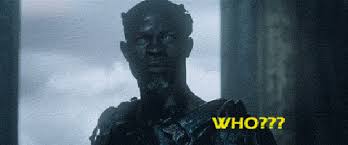
14. The modern man still jots down his grocery list on a piece of scratch paper. The market is no place for his face to be buried in the phone.
Use your phone if you want to. Those cents per ounce tags are sometimes wrong.
Use your phone if you want to. Those cents per ounce tags are sometimes wrong.
15. The modern man has hardwood flooring. His children can detect his mood from the stamp of his Kenneth Cole oxfords.
No, pretty sure the spouse will care more. Hardwood floors are easier to clean, carpets are warmer. Let the spouse worry about it. And stamping around to tell his children what mood he is in is childish.
No, pretty sure the spouse will care more. Hardwood floors are easier to clean, carpets are warmer. Let the spouse worry about it. And stamping around to tell his children what mood he is in is childish.
16. The modern man lies on the side of the bed closer to the door. If an intruder gets in, he will try to fight him off, so that his wife has a chance to get away.
Again, the spouse may have other ideas, eg "That's sweet honey, but she's your dog, you sleep on her side of the bed." or "That's sweet honey, but you want the window open when it's 50 degrees out, you sleep next to it."
Again, the spouse may have other ideas, eg "That's sweet honey, but she's your dog, you sleep on her side of the bed." or "That's sweet honey, but you want the window open when it's 50 degrees out, you sleep next to it."
17. Does the modern man have a melon baller? What do you think? How else would the cantaloupe, watermelon and honeydew he serves be so uniformly shaped?
Of all the kitchen wisdom he could have picked, he chose this one. How to grille, use cast iron, follow a simple recipe are far better choices.
Of all the kitchen wisdom he could have picked, he chose this one. How to grille, use cast iron, follow a simple recipe are far better choices.
18. The modern man has thought seriously about buying a shoehorn.
Uh, or he buys shoes that fit. Seriously, if you need a shoehorn, they're like $10.
Uh, or he buys shoes that fit. Seriously, if you need a shoehorn, they're like $10.
19. The modern man buys fresh flowers more to surprise his wife than to say he is sorry.
Yes.
Yes.
20. On occasion, the modern man is the little spoon. Some nights, when he is feeling down or vulnerable, he needs an emotional and physical shield.
Not very often. Maybe if he's been diagnosed with cancer or something, but no, not more than once per ten years.
Not very often. Maybe if he's been diagnosed with cancer or something, but no, not more than once per ten years.
21. The modern man doesn’t scold his daughter when she sneezes while eating an apple doughnut, even if the pieces fly everywhere.
Sure, accidents happen.
Sure, accidents happen.
22. The modern man still ambles half-naked down his driveway each morning to scoop up a crisp newspaper.
Depends on which half, and why a newspaper? If you mean, he doesn't give a shit if the neighbors see him in sweat pants and bathrobe, then sure.
Depends on which half, and why a newspaper? If you mean, he doesn't give a shit if the neighbors see him in sweat pants and bathrobe, then sure.
23. The modern man has all of Michael Mann’s films on Blu-ray (or whatever the highest quality thing is at the time).
Watch what you like. Who the hell is Michael Mann? I'd rather have Casablanca, Stalag 17, and the Martian.
Watch what you like. Who the hell is Michael Mann? I'd rather have Casablanca, Stalag 17, and the Martian.
24. The modern man doesn’t get hung up on his phone’s battery percentage. If it needs to run flat, so be it.
Direct contradiction to #6. A man should be prepared and take care of his tools.
Direct contradiction to #6. A man should be prepared and take care of his tools.
25. The modern man has no use for a gun. He doesn’t own one, and he never will.
If you like guns, own a gun. Enjoy the bang-bang, but do use hearing protection.
Myself, buying a gun for self defense brings up that kid from 'A Christmas Story.' I might really shoot my eye out.
Thinking back, we weren't a gun family. You called the police for things like that. In fact, my Dad never said anything about physically defending the homestead.
Sure a man is responsible for that, but how much is enough? Good locks, a cell phone and a dog to wake you up? Sure. Maybe add pepper spray or a taser.
But a gun? How many? One gun? Two? Is a 22LR enough or do you need a 45? One reddit post on your first gun suggested a Ruger 10/22 to learn how to shoot, a Glock for carry, an AR15 for uh, something. At what point do you shrug and say 'That's a twenty-seven ninja scenario'? You do realize violent crime is at an all-time low, right?
Dad did harp on supporting myself. He wasn't going to do it. The bill collectors come every month, so you best be able to pay them. And running a debt on your credit card is stupid. So is rent-to-own, 90% of the time. Defending yourself economically happens every month, so you better have your bank-account fu up to match your spending.
As for physical self defense, I'm toying with the concept a man should know his fisticuffs and stay in good shape before buying a gun for self defense. So many places he won't have a gun, but having some idea how to throw a punch can't be taken from him. But I'm still sorting out this concept.
Again, if you like guns, buy a gun. Enjoy safely. (If you like your AR because it's Legos for grownups, knock yourself out!)
If you like guns, own a gun. Enjoy the bang-bang, but do use hearing protection.
Myself, buying a gun for self defense brings up that kid from 'A Christmas Story.' I might really shoot my eye out.
Thinking back, we weren't a gun family. You called the police for things like that. In fact, my Dad never said anything about physically defending the homestead.
Sure a man is responsible for that, but how much is enough? Good locks, a cell phone and a dog to wake you up? Sure. Maybe add pepper spray or a taser.
But a gun? How many? One gun? Two? Is a 22LR enough or do you need a 45? One reddit post on your first gun suggested a Ruger 10/22 to learn how to shoot, a Glock for carry, an AR15 for uh, something. At what point do you shrug and say 'That's a twenty-seven ninja scenario'? You do realize violent crime is at an all-time low, right?
Dad did harp on supporting myself. He wasn't going to do it. The bill collectors come every month, so you best be able to pay them. And running a debt on your credit card is stupid. So is rent-to-own, 90% of the time. Defending yourself economically happens every month, so you better have your bank-account fu up to match your spending.
As for physical self defense, I'm toying with the concept a man should know his fisticuffs and stay in good shape before buying a gun for self defense. So many places he won't have a gun, but having some idea how to throw a punch can't be taken from him. But I'm still sorting out this concept.
Again, if you like guns, buy a gun. Enjoy safely. (If you like your AR because it's Legos for grownups, knock yourself out!)
26. The modern man cries. He cries often.
No. When his mom, brother, college buddy or dog dies, yes. If he has to blow his nose at the end of A Christmas Carol or It's a Wonderful Life, then that's allergies, or invisible onion-cutting ninjas. But full on sobbing? Often? No.
No. When his mom, brother, college buddy or dog dies, yes. If he has to blow his nose at the end of A Christmas Carol or It's a Wonderful Life, then that's allergies, or invisible onion-cutting ninjas. But full on sobbing? Often? No.
27. People aren’t sure if the modern man is a good dancer or not. That is, until the D.J. plays his jam and he goes out there and puts on a clinic.
What? I'd say a man should know the waltz, two-step, and East coast swing, including knowing how to signal a turn.
What? I'd say a man should know the waltz, two-step, and East coast swing, including knowing how to signal a turn.
Wednesday, August 26, 2015
Heinlein's 'The Moon is a Harsh Mistress' As A Movie
For many years, I've wanted to see Heinlein's last Hugo award winning novel converted to a movie. Seeing the plucky Loonies fight off the hamfisted Terran Federation would be definitely very enjoyable. Recently, however, I've come to see some major problems with the novel as a movie.
The first relates to a major issue in the novel - the low gravity of the Moon. It figures in many aspects of the storyline. The inhabitants of the Moon are permanentally adapted to the one sixth gee, and can't return to earth for any sort of normal existence. When the Federation lands troops on the moon to suppress the revolt, the troops are hampered by their inexperience, and the Loonies use this to their advantage. In any adaptation of the novel, the gravity should figure in every scene, not just a few. Depicting the low gravity is very difficult.
The movie Gravity did show zero gee very well, and for the full length of the movie. However Cuaro only had to show one person moving in zero gee- not whole families, riots and battles. The one sixth gravity would be quite the hindrance of translating the novel and it has to be shown.
Another issue is that Heinlein told us about a revolt on the moon, but did not show it. Much of the preparation of for the rebellion is laid out in expository pages. Heinlein, master that he was, got away with it, but it won't work for a video art form. The directory could opt for numerous montage scenes, but that gets old fast.
Heinlein also glossed over several character issues. He shows a long discussion with Manny and Stuart Lajoie to enlighten the reader as to the social status of females and the social heirarchy on Luna. He skips later scenes when Lajoie becomes entranced with Manny's family, and not only figures out what's going on, but joins the rebellion as soon as he's informed. In a later scene Manny complains that many of Prof's friends spoke down to him during the time when Luna was preparing for invasion. But this was never shown. The first the reader hears of it is when Manny complains about it.
The obvious solution for these two issues is of course to write more material. Introduce more characters and show them joining the rebellion and what it means. Let us see Lajoie get swayed by Wyoming Knott, watch his face as he puts clues together and figures out whats going on. Show the progression of the revolt from the formation of the cell system, to the gang rape and riots that resulted with the Loonies overthrowing the local authorities. This of course would mean not a movie, but a full HBO or Netflix style series. Maybe show three seasons, one season for the insurgency, one for the rebellion and one for fighting the invasion forces.
Finally their are several major plot holes that need to be resolved. The first involves the various tricks Mycroft plays on the occupying forces. Unlike 1965, computers are now prevalent in society. The first thing Alvarez would think of would be computer viruses or back doors allowing access to the mainframe. As the local computer consultant, they would heavily scrutinize Manny. Perhaps some sort of LeCarre sting could be worked out to redirect attention to some one else - a very smart computer scientist on the Fed's payroll, but it would still be difficult. Alvarez would know what was happening, he just couldn't prove it. He may even campaign for a total reboot that would destroy Mycroft.....hmmm that could lead to a heist episode where Manny has to download Mycroft to a portable disk drive. Okay, maybe this plot hole could be fixed, but the writers would have to spend some time on it.
The second major plot hole involves sending convicts to the moon to do the Fed's farm labor. With a long waiting list for colonizing Mars, I don't think it would be difficult to find volunteers to colonize the moon. Why send dangerous convicts who would more like as not drag their heels and try to sabotage every project? The moon is only three seconds from the earth- many tasks could be done by drones monitored from earth. The idea doesn't make sense.
Also, consider the whole 'farming wheat on the moon to resolve a hunger crises on earth' scheme. Heinlein was only guessing at the amount of Lunar water, but we now know there isn't very much. The lunar regolith lacks carbon and nitrogen, vital necessities for any agricultural endeavors. Any scheme to send convicts to the moon to farm food for earth would just be met with a puzzled look and the question, "Why not just build more prison farms in Nebraska and Alabama?"
A plot point about the rebellion was the Loonies had to revolt or face a severe ecologic crisis as they mined the last of their water. They would not even be able to feed themselves, let alone the teaming masses of India or China. With all the current emphasis on sustainability, I'm not sure how no one would notice that the Moon is running out of water, carbon and nitrogen. The scheme in the later part of the novel where an indigenous Lunar authority increases grain shipments would be utterly ludicrous.
The idea of the descendants of convicts on the moon revolting against outside authority certainly touches part of the human spirit, but making a movie from Heinlein's book presents far too many problem. It's a shame though, because I'd love to see it.
The first relates to a major issue in the novel - the low gravity of the Moon. It figures in many aspects of the storyline. The inhabitants of the Moon are permanentally adapted to the one sixth gee, and can't return to earth for any sort of normal existence. When the Federation lands troops on the moon to suppress the revolt, the troops are hampered by their inexperience, and the Loonies use this to their advantage. In any adaptation of the novel, the gravity should figure in every scene, not just a few. Depicting the low gravity is very difficult.
The movie Gravity did show zero gee very well, and for the full length of the movie. However Cuaro only had to show one person moving in zero gee- not whole families, riots and battles. The one sixth gravity would be quite the hindrance of translating the novel and it has to be shown.
Another issue is that Heinlein told us about a revolt on the moon, but did not show it. Much of the preparation of for the rebellion is laid out in expository pages. Heinlein, master that he was, got away with it, but it won't work for a video art form. The directory could opt for numerous montage scenes, but that gets old fast.
Heinlein also glossed over several character issues. He shows a long discussion with Manny and Stuart Lajoie to enlighten the reader as to the social status of females and the social heirarchy on Luna. He skips later scenes when Lajoie becomes entranced with Manny's family, and not only figures out what's going on, but joins the rebellion as soon as he's informed. In a later scene Manny complains that many of Prof's friends spoke down to him during the time when Luna was preparing for invasion. But this was never shown. The first the reader hears of it is when Manny complains about it.
The obvious solution for these two issues is of course to write more material. Introduce more characters and show them joining the rebellion and what it means. Let us see Lajoie get swayed by Wyoming Knott, watch his face as he puts clues together and figures out whats going on. Show the progression of the revolt from the formation of the cell system, to the gang rape and riots that resulted with the Loonies overthrowing the local authorities. This of course would mean not a movie, but a full HBO or Netflix style series. Maybe show three seasons, one season for the insurgency, one for the rebellion and one for fighting the invasion forces.
Finally their are several major plot holes that need to be resolved. The first involves the various tricks Mycroft plays on the occupying forces. Unlike 1965, computers are now prevalent in society. The first thing Alvarez would think of would be computer viruses or back doors allowing access to the mainframe. As the local computer consultant, they would heavily scrutinize Manny. Perhaps some sort of LeCarre sting could be worked out to redirect attention to some one else - a very smart computer scientist on the Fed's payroll, but it would still be difficult. Alvarez would know what was happening, he just couldn't prove it. He may even campaign for a total reboot that would destroy Mycroft.....hmmm that could lead to a heist episode where Manny has to download Mycroft to a portable disk drive. Okay, maybe this plot hole could be fixed, but the writers would have to spend some time on it.
The second major plot hole involves sending convicts to the moon to do the Fed's farm labor. With a long waiting list for colonizing Mars, I don't think it would be difficult to find volunteers to colonize the moon. Why send dangerous convicts who would more like as not drag their heels and try to sabotage every project? The moon is only three seconds from the earth- many tasks could be done by drones monitored from earth. The idea doesn't make sense.
Also, consider the whole 'farming wheat on the moon to resolve a hunger crises on earth' scheme. Heinlein was only guessing at the amount of Lunar water, but we now know there isn't very much. The lunar regolith lacks carbon and nitrogen, vital necessities for any agricultural endeavors. Any scheme to send convicts to the moon to farm food for earth would just be met with a puzzled look and the question, "Why not just build more prison farms in Nebraska and Alabama?"
A plot point about the rebellion was the Loonies had to revolt or face a severe ecologic crisis as they mined the last of their water. They would not even be able to feed themselves, let alone the teaming masses of India or China. With all the current emphasis on sustainability, I'm not sure how no one would notice that the Moon is running out of water, carbon and nitrogen. The scheme in the later part of the novel where an indigenous Lunar authority increases grain shipments would be utterly ludicrous.
The idea of the descendants of convicts on the moon revolting against outside authority certainly touches part of the human spirit, but making a movie from Heinlein's book presents far too many problem. It's a shame though, because I'd love to see it.
Monday, August 10, 2015
Leverage - replace term privilege. Privilege tends to be something people enjoy, and don't work at. Think of it as how much lever arm you have to get things done in your life. Has connotation of pushing down, working on the lever. Also applies to all sorts of situations - Parents stayed married, are supportive, culture of can do attitude. Refer to folks 'He had some short lever days but he worked hard and got ahead.'
Still not perfect. Anybody that had to pull an all nighter to get a project finished or pull multiple weeks of sixteen hour days won't like it. When you're in the trenchs hard to think about your leverage, cause working hard is hard work. Romney is a long lever guy, but wonder how much that crossed his mind in the last three weeks of the election with twenty hour days.
Still not perfect. Anybody that had to pull an all nighter to get a project finished or pull multiple weeks of sixteen hour days won't like it. When you're in the trenchs hard to think about your leverage, cause working hard is hard work. Romney is a long lever guy, but wonder how much that crossed his mind in the last three weeks of the election with twenty hour days.
In real life...
These started with a joke I heard back when Independence Day came out. Supposedly during the scene where the Brett Spiner character is getting thrashed by the alien in the exoskeleton, in some theatre somewhere, a small boy piped up "In real life, Data would kick the alien's butt."
I started collecting more 'in real life' sayings, where reality gets a littly blurry. Here are two I remember, and will add more as I come across them.
During the aftermath of Hurricane Katrina, the governor went on TV and pathetically cried, begging the federal government for assistance. In real life, if Laura Roslin was governor, she would have organized and led her own convoy into New Orleans, twenty four hours ahead of FEMA.
While watching Star Wars: Attack of the Clones, I felt a moment of liking for Anakin Skywalker when he insisted they investigate the attempted assasination of Padma. But then I realized, in real life, Lord Auditor Vorkosigan would have unmasked Palpatine in about three days, cutting out the need for a third movie.
I started collecting more 'in real life' sayings, where reality gets a littly blurry. Here are two I remember, and will add more as I come across them.
During the aftermath of Hurricane Katrina, the governor went on TV and pathetically cried, begging the federal government for assistance. In real life, if Laura Roslin was governor, she would have organized and led her own convoy into New Orleans, twenty four hours ahead of FEMA.
While watching Star Wars: Attack of the Clones, I felt a moment of liking for Anakin Skywalker when he insisted they investigate the attempted assasination of Padma. But then I realized, in real life, Lord Auditor Vorkosigan would have unmasked Palpatine in about three days, cutting out the need for a third movie.
Monday, June 16, 2014
Stop calling them the 'Middle Ages'
One issue with the study of the Middle Ages, is the very name of the time period. It postulates a middle ground that implicitly references the two endpoints - the Roman Empire and the so-called ‘Renaissance’. Like the middle child, the Middle Ages gets overlooked because of the name.
Casting about for a new name, I’ve considered two. The first is the Archipelago Ages. ‘Archipelago’ is used to emphasize how each city, village and county was its own little island in both space and time. The name accentuates how individuals study individual islands also highlights the differences and variety of each region. Researchers can also point out how a variety of sources changes how much we know about each island, labeling some islands as unknown due to the paucity of materials - with the unstated challenge that some future historian might some day explore the territory, adding to our knowledge.
Of course, most places are not literally islands, so we can postulate each island is connected via metaphorical ocean currents that allow for trade of culture and technology. Additionally, a tribe or group of people would colonize groupings of islands, thus describing similarities. Islands existing in contact -either geographically or on trade routes - would show similarities with their neighbors as well.
At least two objections to this name come to mind. First, although Europe does possess important islands- Britain, Ireland, Sicily and so on- peninsula is the major geographic feature, not island. Even more importantly, the image of historians studying a metaphorical archipelago holds for many time periods of history, not least of which would be the actual archipelagos of the Pacific and Indian Oceans. Archipelago Ages has distinct disadvantages and doesn't fit.
Concordat Era is the second and more fitting description of the Middle Ages. The one thing that seems common is people, both individually and in groups, were constantly making pacts and promises. Whether between lord and knight, town and king, or guild and artisan, contracts were everywhere. Even peasants made contracts - eg wealthy peasants contracted with poor to provide housing and clothing in exchange for household services. Even parents would contract with children to spell out exactly how much support the children had to provide after the parents retired.
By emphasizing the contracts the various issues of certain other words- eg the f-word-ism-are avoided. We sidestep whether the pacts were for land, money, goods, included juridical powers or military service. The compacts could be implicit by custom or explicit and spelled out in detail. In fact maybe that’s how historians should describe the cultures of the concordat era- the movement of implicit to explicit and back.
Since people like to use things they are familiar with, they would use familiar kinds of concordats, changing them to new conditions as needed. In this scheme, the Crusaders weren’t introducing a particular -ism, but simply taking up the tool they knew, adapting it as necessary and employing this tool for a goal - governance of the land conquered in the Crusades. Same thing for William the Conqueror after Hastings.
Concordat Era gives the Middle Ages new stature, as existing as more than a waypoint between ‘Antiquity’ and the ‘Modern’ era. The new name underscores the primary feature of the time period, including the variability and diversity, without the need for constant hedging about and equivocating. It gives the layperson a handle on what was going on for hundreds of years without extensive study of all cultures in Europe. Let’s start using it today.
Friday, August 10, 2012
The real purpose of the MSL laser
The Mars Science Lander has a big ole laser on it and NASA says its for science. In real life, there was a secret mission to Mars that's gone rogue. The Cimmeria Advanced Traveler landed in the Terra Cimmeria area seven years ago to explore crater formations. The probe began ignoring commands, responding occasionally, if at all. Scientists have lost all contact and fear the missing probe may biologically contaminate the sandy Martian soil. Extreme measures must be taken. The purpose of the laser is obvious: Curiosity must hunt down and kill the CAT.
Monday, August 6, 2012
Sunday, February 12, 2012
Independence Day
I was thinking of the old movie Independence Day, the one with Will Smith and Jeff Goldblum. At end of the movie, humanity celebrated the destruction of the alien mothership and all the strike ships. Happiness and good will pervaded all.
The scene glosses over the reality of the situation. The aliens destroyed the cities of New York, Los Angeles, Houston and Washington DC with their opening salvo. The humans nuked the strikeship in Houston with no effect to the strikeship, but plenty of effect to the surrounding countryside. After the initial attack, the strikeships started moving through out the country, destroying major cities. We could probably add Boston, Philadelphia, and Las Vegas, NV to the list, at least. The rest of the world fared no better, with all the major capitals destroyed, followed by subsequent destruction of major cities.
The power grid was probably destroyed, so most US cities have no power. The refineries near Houston were destroyed also, so gasoline would soon be in short supply. Food could not get from the farms to the survivors easily. The catastrophe grows greater the more you think of it.
And the aliens could have done so much more. Fortunately for us they were a telepathic race with no concept of internet security. Any sort of smart alien invasion we would have little chance against. Most stories of alien invasion deliberately gimp the aliens so humans can take that slender shot, and against all the odds, triumph.I'm all for humans winning, but we may not be so fortunate as our fictional counterparts if we ever contact intelligent alien life.Luckily for us, it appears we have a long time (possibly forever) to prepare.
Monday, October 10, 2011
Worth
I have found I am particularly distrustful of stories of economic inequality based on worth. There are several reasons for this, including an inaccurate mixing of statistics, a person's actions that do not accumulate worth, and a lack of indication of remedies.
First, many of these articles seem to mix worth and income, gliding from one to the next with the ease of a smiling car salesman asking you what payment you want. They neglect that although Bill Gates is worth $40 billion dollars, the worth is mostly in Microsoft stock. Bill Gates' worth is not a big bank balance with the first five digits reading something like 40,272 and the next six digits ticking steadily upwards as interest accumulates. His worth is in the form of stock, whose value is determined by the market. The same can be said for Warren Buffett and dozens of other billionaires and thousands of millionaires. Admittedly, their income is extremely high, but if you want to talk about income inequality, use income figures. Don't shift sneakily over to worth in mid paragraph, or even mid sentence.
Next, lets face it, most people don't really think about increasing their net worth. Imagine a person making $40,000 a year, well below national median income. They are frugal and have no ongoing debts, and even possess a small emergency fund against things like needed car repair or emergency room visits. Give this person a $2000 bonus and do they really rush home and invest in Disney stock? No, its spent on a new HDTV, or a gaming laptop, or new furniture, or a trip to Paris. People in middle and below income brackets simply don't think about long term gain of worth.
I agree that many people in these income brackets are struggling financially, burdened with expenses such as school loans or credit card debt. And the credit card debt is not necessarily from unwise consumer spending, but from something like necessary car repair when the savings balance showed zero, or a long spell of unemployment. Any windfall would most wisely go to reducing expenses, not investing in new worth.
Also, the road to increase one's worth is currently very murky. The fickle stock market will eat your windfall like a hungry West Virginian after an evening smoking pot. Real estate will take years to show a profit, if ever, and still requires a large initial investment. The lack of clear direction for improving one's financial worth is actually a severe problem, worthy of another essay. Still, most people have a consumer mentality, and this prevents people from accumulating wealth.
Lastly, constantly pointing out worth inequality doesn't really indicate any long term path to remedies. More taxes? Republicans fight even mild increase in taxes on the income of the wealthy tooth and nail, so no increase on total worth will gain ground politically. And any substantial tax that required the Buffetts or the Gateses of the world to divest would drive stock prices down as they flooded the market with stock or real estate. Sorry, that $10,000 in Microsoft stock you diligently saved for, its worth $7500 now. So even if the Wall Street Protests gain ground, exactly what will they do with that political power to promote spreading of wealth?
So you can see that statistics and essays comparing worth are, well, worthless. They mix statistics to confuse the reader, they refuse to take into account the consumer mentality prevalent in the United States, and never mention any solid remedies. I'm all for moving people up the socio-economic ladder, but lets start with something more concrete than discussions of worth.
First, many of these articles seem to mix worth and income, gliding from one to the next with the ease of a smiling car salesman asking you what payment you want. They neglect that although Bill Gates is worth $40 billion dollars, the worth is mostly in Microsoft stock. Bill Gates' worth is not a big bank balance with the first five digits reading something like 40,272 and the next six digits ticking steadily upwards as interest accumulates. His worth is in the form of stock, whose value is determined by the market. The same can be said for Warren Buffett and dozens of other billionaires and thousands of millionaires. Admittedly, their income is extremely high, but if you want to talk about income inequality, use income figures. Don't shift sneakily over to worth in mid paragraph, or even mid sentence.
Next, lets face it, most people don't really think about increasing their net worth. Imagine a person making $40,000 a year, well below national median income. They are frugal and have no ongoing debts, and even possess a small emergency fund against things like needed car repair or emergency room visits. Give this person a $2000 bonus and do they really rush home and invest in Disney stock? No, its spent on a new HDTV, or a gaming laptop, or new furniture, or a trip to Paris. People in middle and below income brackets simply don't think about long term gain of worth.
I agree that many people in these income brackets are struggling financially, burdened with expenses such as school loans or credit card debt. And the credit card debt is not necessarily from unwise consumer spending, but from something like necessary car repair when the savings balance showed zero, or a long spell of unemployment. Any windfall would most wisely go to reducing expenses, not investing in new worth.
Also, the road to increase one's worth is currently very murky. The fickle stock market will eat your windfall like a hungry West Virginian after an evening smoking pot. Real estate will take years to show a profit, if ever, and still requires a large initial investment. The lack of clear direction for improving one's financial worth is actually a severe problem, worthy of another essay. Still, most people have a consumer mentality, and this prevents people from accumulating wealth.
Lastly, constantly pointing out worth inequality doesn't really indicate any long term path to remedies. More taxes? Republicans fight even mild increase in taxes on the income of the wealthy tooth and nail, so no increase on total worth will gain ground politically. And any substantial tax that required the Buffetts or the Gateses of the world to divest would drive stock prices down as they flooded the market with stock or real estate. Sorry, that $10,000 in Microsoft stock you diligently saved for, its worth $7500 now. So even if the Wall Street Protests gain ground, exactly what will they do with that political power to promote spreading of wealth?
So you can see that statistics and essays comparing worth are, well, worthless. They mix statistics to confuse the reader, they refuse to take into account the consumer mentality prevalent in the United States, and never mention any solid remedies. I'm all for moving people up the socio-economic ladder, but lets start with something more concrete than discussions of worth.
Wednesday, July 27, 2011
Reading List
Well I've just come from The Art of Manliness and their reading list, so I was inspired to put together my own. I haven't tried to rank them. This list is more of books that people actually read, not just say they've read.
Starship Troopers by Robert Heinlein - pro- military
The Forever War by Joe Haldeman - anti-military
Old Man's War by John Scalzi - third view of war
With Fire and Sword by Henyrk Sienkiewicz - 19th century adventure novel
1984 by George Orwell - brutal dictatorship
Brave New World by Aldous Huxley - dictatorship of comfort and free sex
Catch-22 - by Joseph Heller -anti-military and founded a new phrase
The Curse of Chalion - Lois McMaster Bujold - what it really means to do God's will
Dune by Frank Herbert - Messiah in space
Double Star by Robert Heinlein - doing your duty although it erases you.
War and Peace by Leo Tolstoy - human nature, and some comments on war
A Princess of Mars - by Edgar Rice Burroughs - honor, courage, rip-roaring adventure.
Tuf Voyaging - George R R Martin - for some reason, Haviland Tuf appeals to me.
Callahan's Cross Time Saloon - by Spider Robinson. Shared pain decreases.
Day of the Triffids by John Wynham - end of the world via biological warfare.
Huckleberry Finn - by Mark Twain
The Hobbit - J RR Tolkien - of course
Lord of the Rings - J R R Tolkien - natch.
Macbeth - Shakespeare - murder, treason, guilt!
Ender's Game - Orson Scott Card - kids are smarter than adults
A Wrinkle in Time - Madeleine L'Enge
Dracula - Bram Stoker
Startide Rising - David Brin
Have Space Suit - Will Travel by Robert Heinlein
Hyperion by Dan Simmons - kind of have to read the sequel Fall of Hyperion also
Watership Down - Robert Adams
Starship Troopers by Robert Heinlein - pro- military
The Forever War by Joe Haldeman - anti-military
Old Man's War by John Scalzi - third view of war
With Fire and Sword by Henyrk Sienkiewicz - 19th century adventure novel
1984 by George Orwell - brutal dictatorship
Brave New World by Aldous Huxley - dictatorship of comfort and free sex
Catch-22 - by Joseph Heller -anti-military and founded a new phrase
The Curse of Chalion - Lois McMaster Bujold - what it really means to do God's will
Dune by Frank Herbert - Messiah in space
Double Star by Robert Heinlein - doing your duty although it erases you.
War and Peace by Leo Tolstoy - human nature, and some comments on war
A Princess of Mars - by Edgar Rice Burroughs - honor, courage, rip-roaring adventure.
Tuf Voyaging - George R R Martin - for some reason, Haviland Tuf appeals to me.
Callahan's Cross Time Saloon - by Spider Robinson. Shared pain decreases.
Day of the Triffids by John Wynham - end of the world via biological warfare.
Huckleberry Finn - by Mark Twain
The Hobbit - J RR Tolkien - of course
Lord of the Rings - J R R Tolkien - natch.
Macbeth - Shakespeare - murder, treason, guilt!
Ender's Game - Orson Scott Card - kids are smarter than adults
A Wrinkle in Time - Madeleine L'Enge
Dracula - Bram Stoker
Startide Rising - David Brin
Have Space Suit - Will Travel by Robert Heinlein
Hyperion by Dan Simmons - kind of have to read the sequel Fall of Hyperion also
Watership Down - Robert Adams
Tuesday, July 12, 2011
Hero or Protagonist?
I've wondered on whether to use the term hero or protagonist when talking about writing. Both have their upsides and downsides.
Hero is the older term. Its short, four letters, I'm done. But it traditionally indicates a male character. The term also tends to connotate a character with few faults. With the modern fixation on "three dimensional" characters, or even worse "gritty and edgy" characters, hero just seems old fashioned and past its prime.
Protagonist? Too long, and my fingers hate typing it. Its just damn pretentious, like my main character has a dark past doing something awful, like "selling drugs disguised as a nun". Or he stands on windswept crags, staring into dark thundering clouds, spending forty two long pages pondering the meaning of life, the universe and everything.
I've decided to use the word "toon", from "cartoon". Toon is used by many MMORPG players to refer to their characters in the game. It seems to have come from World of Warcraft, inspired by the cartoon like artwork perhaps, but may be older.
Oh, but am I writing cartoons? Those aren't realistic at all! Well, when you get right down to it, most fiction is about unrealistic people or situations. The audience, whether readers or viewers, generally want something extraordinary. More action, more drama, more comedy than in real life. All fiction is about the out of the ordinary. A story about an engineer who goes to work, comes home, reads novels, goes to movies with friends, works out twice a week and goes to church once a month will never get published. If the same character stumbles across a plot to assassinate the president, or discovers vampires living next door, or "falls into a wormhole and the next moment is fighting Sleestak halfway across the galaxy", well thats sellable copy.
And in the 21st century its not enough to have extraordinary circumstances. Your character has to have some dark past. Its just not enough to fight fundamentalist christians bent on assasinating the great progressive hope, the protagonist (I swear it takes me a full sixty seconds to type that fricking word) must also be a former drug dealer, or committed atrocities as a mercenary in Iraq, or something "gritty and edgy". All in the name of 'three dimensionality'.
Of course, most people just aren't like that. Most of us are pretty two dimensional. Most of us will not dangle upside down from a high rise trying to disarm a nuclear bomb while struggling with the DTs because we're an addict who picked the wrong day to give up heroin.
The word toon reminds us what we write is not normal. Our audience wants more than normal and its our job to give it to them. If we don't, the reader will move to some one who will.
Reference: Orson Scott Card in his book on characters points out that fictional characters are not normal. I think Dwight Swain does too in his "Techniques for the selling writer", but can't recall. The quote about Sleestak is from an episode of Castle, I don't know which one.
Hero is the older term. Its short, four letters, I'm done. But it traditionally indicates a male character. The term also tends to connotate a character with few faults. With the modern fixation on "three dimensional" characters, or even worse "gritty and edgy" characters, hero just seems old fashioned and past its prime.
Protagonist? Too long, and my fingers hate typing it. Its just damn pretentious, like my main character has a dark past doing something awful, like "selling drugs disguised as a nun". Or he stands on windswept crags, staring into dark thundering clouds, spending forty two long pages pondering the meaning of life, the universe and everything.
I've decided to use the word "toon", from "cartoon". Toon is used by many MMORPG players to refer to their characters in the game. It seems to have come from World of Warcraft, inspired by the cartoon like artwork perhaps, but may be older.
Oh, but am I writing cartoons? Those aren't realistic at all! Well, when you get right down to it, most fiction is about unrealistic people or situations. The audience, whether readers or viewers, generally want something extraordinary. More action, more drama, more comedy than in real life. All fiction is about the out of the ordinary. A story about an engineer who goes to work, comes home, reads novels, goes to movies with friends, works out twice a week and goes to church once a month will never get published. If the same character stumbles across a plot to assassinate the president, or discovers vampires living next door, or "falls into a wormhole and the next moment is fighting Sleestak halfway across the galaxy", well thats sellable copy.
And in the 21st century its not enough to have extraordinary circumstances. Your character has to have some dark past. Its just not enough to fight fundamentalist christians bent on assasinating the great progressive hope, the protagonist (I swear it takes me a full sixty seconds to type that fricking word) must also be a former drug dealer, or committed atrocities as a mercenary in Iraq, or something "gritty and edgy". All in the name of 'three dimensionality'.
Of course, most people just aren't like that. Most of us are pretty two dimensional. Most of us will not dangle upside down from a high rise trying to disarm a nuclear bomb while struggling with the DTs because we're an addict who picked the wrong day to give up heroin.
The word toon reminds us what we write is not normal. Our audience wants more than normal and its our job to give it to them. If we don't, the reader will move to some one who will.
Reference: Orson Scott Card in his book on characters points out that fictional characters are not normal. I think Dwight Swain does too in his "Techniques for the selling writer", but can't recall. The quote about Sleestak is from an episode of Castle, I don't know which one.
Plotting
So I'm stuck at a particular part in my novel, not sure how to move the plot forward. I finally decided to apply the principle "when you don't know what to do, make your toon's life more difficult."
That gives me a general direction to go, but specifically how to proceed still stumps me. Do I need to work out how the hero will escape from this first? Or just toss him towards the river of man eating crocodiles and hope I can write the escape when the time comes? Decisions decisions.
That gives me a general direction to go, but specifically how to proceed still stumps me. Do I need to work out how the hero will escape from this first? Or just toss him towards the river of man eating crocodiles and hope I can write the escape when the time comes? Decisions decisions.
Quantum Entanglement
When you hear about quantum entanglement, its discussed as a bizarre principle of physics where a photon or particle here can be affected by poking its entangled partner over there, and then the article generally continues on about new computer chips or even teleportation. In the real world, quantum entanglement is the principal Blizzard uses to ensure Barren's chat is the same across all servers.
Wednesday, April 13, 2011
The Story Bible
Unless it’s a short story with characters that are vivid in the writer’s head, every story needs a story bible. A story bible is simply the sum of all notes and research done for that story. You need the story bible to keep all the details of the story straight. The details include information on all the characters – physical descriptions, what cars they drive (or horses they ride for a fantasy or western story), background, flaws, talents, attitudes towards other characters, politics. Some TV shows use story bibles, and they are generally called show bibles.
You need these details for all but the shortest stories. Suppose you are writing a private detective story and your hero shows up on the scene of a crime in chapter 1. The police detective he works with is a minor character at this point, and you toss off a physical description. But then in chapter 3, the police detective pops up again. And then again in chapter 5 your hero (or heroine-I’m too lazy to type out protagonist) stubbornly starts flirting with the detective and they start dating. You didn’t really plan this, but then realize it’s a great subplot that resolves some plot holes. You can have the police detective offer some help in chapter 12, maybe kill them off in chapter 17 as a pre-climax major disaster. So you quite fighting it and let your protagonist date the police detective. Quick, what color are the detective’s eyes? Hair - long, short, color? What kind of body? You mentioned all these details in chapter one. If the police detective is now a major character maybe they need some major character flaws, a background, hobbies, skills. With a story bible, you have at least some information in a central place, and can go back and add more when needed.
The story bible contains other information such as ideas for story scenes, plot arcs, research, notes on locations. Continuing on the mystery theme, you can keep track that Lincoln county as politically appointed coroners that may stink on forensics, but nearby Brown County uses paid medical examiners. Whether Lincoln and Brown counties are fictional or not, you want to make sure the system stays the same throughout the novel – unless that’s a plot point, but then you still don’t want the system to magically change from one chapter to the next. Maybe the hero is stalking the killer in a large warehouse or industrial complex. A quick sketch of the location can flesh out the details in your mind, and keep everybody involved honest when it comes to any actions scenes. You don’t suddenly want to add explosives or industrial equipment to a garment warehouse unless you have a good reason too. So I hope you get the idea of the need for a story bible.
What does a story bible look like? They have many forms and every writer has to work out a system for themselves. The low tech approach is paper and pen style. This could be as simple as a big spiral notebook you can get for a quarter at the back to school sales. Number all the pages for reference, then add some tabs –store bought or home made. The tabs divide the notebook into sections- Plot, Character, Locations, Research, etc. You can spend a little more and use three ring binders , or those expandible file folders that can hold your spiral notebook, index cards, magazine articles etc.
The major advantage of low tech methods are cost and ease of use. A spiral notebook for a quarter is almost the cheapest tool you’ll buy as a writer. You don’t need a computer or internet connection. Many people are better at brainstorming and general creativity when using paper and pen. The major disadvantage is they aren’t computer searchable, and of course if you lose it, you are in deep trouble. It’s difficult to make backups of hand written copies. You may have trouble adding to it as well. That police detective from chapter one may have gotten ½ page allotted to them at first, and now they need three or four pages by chapter 5. Page numbers can help keep things referenced, and an index you build as you go also helps, but will quickly get out of alphabetical order.
The high tech approach brings the computer into the equation. Most of us –unless your name is Berry or Stephenson- write on a computer. So although they are expensive, we obviously already have one.
How do we use the computer to make the story bible? You can simply have a big document with multiple sections, like the spiral notebook. Another option is a spreadsheet program like Excel. Each novel would have its own spreadsheet, then you could setup separate worksheets with titles like Character, Location, Plot, and so on. Each character could be an entry in a table with columns for physical description, flaws, background, etc.
Users of MS Office may have a program called OneNote on their machines. This is a somewhat unique application for gathering all your information- notes, documents, presentations, hyperlinks, pictures, pdf files into one locations. If you have a tablet PC, OneNote allows you to write hand written notes and then converts the notes to searchable text. (I had classmates with the entire vet school curriculum, including all their class notes contained in One Note, cross referenced, and computer searchable. Me, jealous? Never.)
The next stage up is the creative writing software. These packages include specific windows or panels for entering characters details, research, location notes, general plot notes. and so on. They have outliners to keep track of your scenes, and make notes on them. You can re-order you scenes by 'drag and drop' in the outline view. (Try that with a big Word document.) Many of them allow you to color code scenes by character, theme or subplot. Some have word processors, so you don’t have to keep a separate application handy. Many automatically will format your document for printing in a different format than written. You write in 10 pt Cambria, but East Coast Publishing house wants manuscripts in 12 pt Times New Roman, but West Coast Mysteries wants them in 11 pt Arial? No problem, just a few clicks and out pops the manuscript. Other packages automatically generate title pages and other ancillary pages. Most offer word counts and approximate page counts.
So who makes these packages? Most creative writing software is written in small shops, sometimes only one programmer. They can cost between nothing and several hundred dollars. From my experience, you can get a great package for only $40 - $80. For Apple users, the name Scrivener pops up over and over. I’m not even sure the Macintosh police will let you write a novel without using Scrivener! For Window’s users, there is a beta version of Scrivener available. Other packages include WriteItNow, WriteWayPro, Liquid Storybinder, yWriter, Snowflake Pro, Storybook, Writer’s Cafe and RoughDraft. Most offer some sort of free demo version. Note that yWriter and Storybook are free. I don't believe Snowflake Pro has a free demo, but check for yourself. You must try them to seach which ones you like. I tried Scrivener for windows (beta), WriteWayPro and Writer’s Café, and finally picked WriteWayPro, with Scrivener a close second. (see this blog's first post). For linux users, the Scrivener for windows has a linux version available. You can also try the Windows packages in emulator mode.
Edit 1/8/2017: Scrivener is available for Windows and has been for sometime. After years of waiting for an upgraded version, I abandoned WritewayPro and am now using Scrivener.
I haven’t touched on screenwriting or stageplay software. Similar capibilities and a bit more specialized. Its out there, and I’m sure Google can find it for you.
The advantages of using a computer are the better organization, the ability to quickly change or add new information and the ease of backing up. Backup techniques include portable hard drives, flash drives (even only 2 GB should be enough for your text files, but please don’t quote me like Bill Gates gets quoted), emailing your files to your gmail/yahoo/hotmail etc account, other applications like DropBox or Mosy and so on. Disadvantages obviously are the need for a computer. You still can’t use most laptops outside, even in the shade. And laptops seem to have have a frustrating 2-3 hr battery limit. (Some netbooks and the MacBook are pushing five to six hours, so some hope exists for the battery limit problem.)
You have decisions to make. Whether, low-tech or high tech, you have to figure out what works for you. You might get the idea I’m sold on creative writing software. Definitely. My experience is that the proper tool can make a job so much easier. Sure you can use a three foot carpenter’s level to hang your new kitchen cabinets, but a laser level makes the whole job a hundred times easier. For me, creative writing software is that proper tool. I still have a paper notebook for hand sketches though. Sometimes curling up on the couch with notebook and pen is more creative. Still can’t afford a tablet PC- sigh.
Some can’t afford anything more than a spiral notebook. Another tried their friend's MacBook with Scrivener and can’t have anything less. You may try all the Windows packages and work out a system of index cards with an OneNote file for character notes. The other thing to remember is you can’t be a writer without writing. I am not published because I get absorbed playing computer games, watching all ten seasons of Stargate: SG1, or writing blog posts that keep going round in my head. Evaluate the software packages by actually trying to use them, but don't get absorbed with fancy features. Always keep writing.
*** This topic on Jim Butcher's forum provided much information for this post.
Monday, March 28, 2011
Beware MS Word!
In my last post - also my first post - I mentioned you could write a novel using MS Word, or the old fashioned way, I seemed to imply. I've recently come across a posting why you shouldn't write a novel with MS Word : Beware MS Word! I found this link on the forums at Jim Butcher's website. Hat tip to the poster Mickey Finn. I haven't written 200k words yet, so am personally unaware of MS Word's behavior with large text files. The same forums have a long thread describing various writing tools, including some I didn't cover in my first post. Jim Butcher has a blog where he describes offers several posts on writing tips for beginning authors of genre fiction. Butcher is the author of the Dresden files and Codex Alera and regularly hits the NY Times best seller lists. He isn't really describing anything new, I think - his story skeleton idea looks remarkable similar to something Dwight Swain discusses in Techniques for the Selling Writer. Of course, I'm only posting here because its easier than actually writing.
Friday, March 25, 2011
Software for Writing
These are some notes on three different writing packages I looked over a few months ago. What is writing software? Generally it’s a software tool that allows you to collect character notes, plot ideas, and other material pertinent to your book all in one place. Each package usually has a tool to arrange scenes how you like them, create outlines of your stories and novels and other tools useful to a writer. These are not full reviews, because I haven’t used every feature of every package.
The first package I looked at was WriteWay (http://www.writewaypro.com/) . This package has three versions, demo, standard and professional. The demo version is active for 30 days. Purchasing a standard or professional version allows you to register the software on two different computers. The standard and professional versions each add additional features.
This package has a fairly nice composition area for you to write on. The writing area is easy to maximize and has decent format options. WriteWay creates your manuscript separately from your composition. So you can write your story how you like but through in options menu create a manuscript with different formats. On the left side is an outline tree showing the acts and scenes of your book. There is also a scratch pad section for scenes that you’ve written, but aren’t sure where yet where they belong in the outline.
There are special character windows where you can create character notes and specify background, physical appearance, motivations, weaknesses, strengths and so on. WriteWay provides a default template to guide you on this process. You can also use a blank template if you like a more free form character creation or even create your own template.
WriteWay also has a research window where you can gather notes, links, access the internet through your favorite browser. It’s a useful place to keep research handy, though I confess I haven’t used it much. There is a storyboard section that I haven’t used much either.
I very much like WriteWay’s Future book ideas window. This has a collapsible tree and edit window where you can sketch out ideas for future books and organize them how you like. This window is available from all books you create, so you always have instant access to a universal notebook to keep track of your ideas. You can also use the window to track submissions or other tasks.
The second software package I’ve looked at is Anthemions Writer’s Café (http://www.writerscafe.co.uk/) The demo version lacks some features of the commercial version, but has no time limit. Writer’s Café has many, many features. There’s a workspace for creating character notes and organizing scenes and plots. The composition space is less useful and rather small, with limited formatting options. I found it cramped. I think the feeling is you would write in a dedicated word processor software – indeed there is a link to OpenOffice Writer on the opening screen. Writer’s café also has a name generator, journal feature, and writer’s prompt to help you get some practice when you just don’t feel inspired.
The third package was Scrivener for Windows (Beta) version. My testing was done in November, and they were supposed to have a release version ready by now. Nope, checking the website, the Windows version is still in beta . There is an outline format to organize scenes, a character note utility, , Research section and storyboard utility. I found Scrivener has a certain elegant simplicity to it. You focus on writing with Scrivener, on generating content. Update: as of November 2011, Scrivener for Windows is available for sale.
In the end I picked WriteWay. I really like the Future Book Idea feature that allows me to gather ideas in a central location across all projects. Scrivener was a close second, but it lacked the Future Book Idea feature. The character notes didn’t feel quite as natural, also. Writer’s Café had a limited composition area, limited formatting, and the workspaces felt clumsy to me. The huge number of supposed ‘writing tools’ seemed to limit my actual writing as I tended to fiddle with them, rather than write. Your taste may differ from mine. All three of these packages have free downloads, so try them out for yourself.
Does a writer need a writing package? Of course not. You could do a lot of what these packages do with clever use of MS OneNote, or just Word and maybe an Excel spreadsheet to track the plot and keep character notes and such. Heck, Wendell Berry still writes in pencil, with his wife typing the manuscripts. And back in the 90’s there was a British woman who wrote her first novel longhand, then typed it on a manual typewriter. (The PC existed in the 90’s but they were expensive and she was a single mother.) She eventually got published and her first novel was very well received. So what really matters is getting words on the page. Stephen King recommends one thousand words a day or you’ll never get anywhere as a writer. So, pardon me while I go back to writing.
The first package I looked at was WriteWay (http://www.writewaypro.com/) . This package has three versions, demo, standard and professional. The demo version is active for 30 days. Purchasing a standard or professional version allows you to register the software on two different computers. The standard and professional versions each add additional features.
This package has a fairly nice composition area for you to write on. The writing area is easy to maximize and has decent format options. WriteWay creates your manuscript separately from your composition. So you can write your story how you like but through in options menu create a manuscript with different formats. On the left side is an outline tree showing the acts and scenes of your book. There is also a scratch pad section for scenes that you’ve written, but aren’t sure where yet where they belong in the outline.
There are special character windows where you can create character notes and specify background, physical appearance, motivations, weaknesses, strengths and so on. WriteWay provides a default template to guide you on this process. You can also use a blank template if you like a more free form character creation or even create your own template.
WriteWay also has a research window where you can gather notes, links, access the internet through your favorite browser. It’s a useful place to keep research handy, though I confess I haven’t used it much. There is a storyboard section that I haven’t used much either.
I very much like WriteWay’s Future book ideas window. This has a collapsible tree and edit window where you can sketch out ideas for future books and organize them how you like. This window is available from all books you create, so you always have instant access to a universal notebook to keep track of your ideas. You can also use the window to track submissions or other tasks.
The second software package I’ve looked at is Anthemions Writer’s Café (http://www.writerscafe.co.uk/) The demo version lacks some features of the commercial version, but has no time limit. Writer’s Café has many, many features. There’s a workspace for creating character notes and organizing scenes and plots. The composition space is less useful and rather small, with limited formatting options. I found it cramped. I think the feeling is you would write in a dedicated word processor software – indeed there is a link to OpenOffice Writer on the opening screen. Writer’s café also has a name generator, journal feature, and writer’s prompt to help you get some practice when you just don’t feel inspired.
The third package was Scrivener for Windows (Beta) version. My testing was done in November, and they were supposed to have a release version ready by now. Nope, checking the website, the Windows version is still in beta . There is an outline format to organize scenes, a character note utility, , Research section and storyboard utility. I found Scrivener has a certain elegant simplicity to it. You focus on writing with Scrivener, on generating content. Update: as of November 2011, Scrivener for Windows is available for sale.
In the end I picked WriteWay. I really like the Future Book Idea feature that allows me to gather ideas in a central location across all projects. Scrivener was a close second, but it lacked the Future Book Idea feature. The character notes didn’t feel quite as natural, also. Writer’s Café had a limited composition area, limited formatting, and the workspaces felt clumsy to me. The huge number of supposed ‘writing tools’ seemed to limit my actual writing as I tended to fiddle with them, rather than write. Your taste may differ from mine. All three of these packages have free downloads, so try them out for yourself.
Does a writer need a writing package? Of course not. You could do a lot of what these packages do with clever use of MS OneNote, or just Word and maybe an Excel spreadsheet to track the plot and keep character notes and such. Heck, Wendell Berry still writes in pencil, with his wife typing the manuscripts. And back in the 90’s there was a British woman who wrote her first novel longhand, then typed it on a manual typewriter. (The PC existed in the 90’s but they were expensive and she was a single mother.) She eventually got published and her first novel was very well received. So what really matters is getting words on the page. Stephen King recommends one thousand words a day or you’ll never get anywhere as a writer. So, pardon me while I go back to writing.
Subscribe to:
Posts (Atom)